

At Travel-Dealz, we regularly provide you with tips on how to find cheap and comfortable flights as quickly as possible. For example, we’ve already presented six tools for flight searches, and much more.
But what about other means of transport? You don’t have to miss out on practical tools there, either. That’s why today we’re having a look at seven tools and websites that can be helpful for train travellers.
Table of Contents
Coach Formations and Comfort: Vagonweb.cz
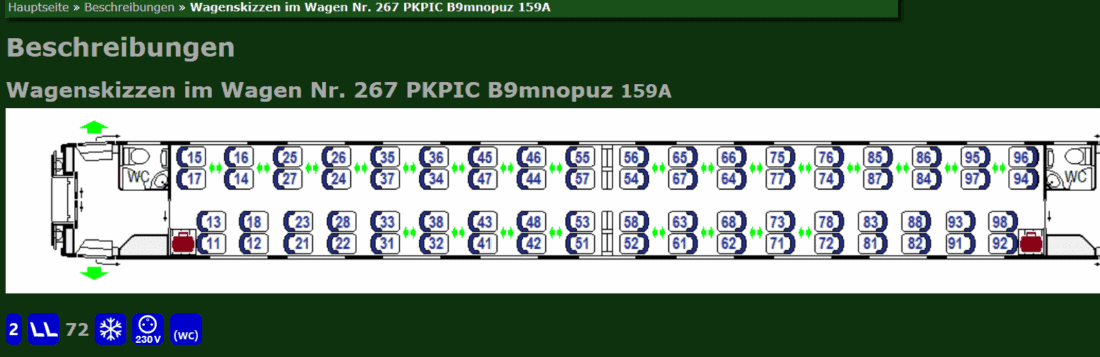
Vagonweb.cz is a handy reference for anyone who wants to know more about the exact makeup of their train before departure. The website provides detailed coach formations and seat maps for a wide range of trains across Europe, including many ICE and IC services, going far beyond what you typically see during a standard seat reservation. Alongside clear diagrams, it often includes photos of the coach interiors and information on features like windows, doors, and seating layouts. This makes it especially useful if you care about choosing the right seat or understanding the comfort level on a specific service.
For example, I was able to find out that some seats on EuroCity 59 (from Berlin to Poland) offer extra legroom. This turned out to be true on the train:
Here’s an example of the coach formations for an RJX 66 from Budapest to Vienna:
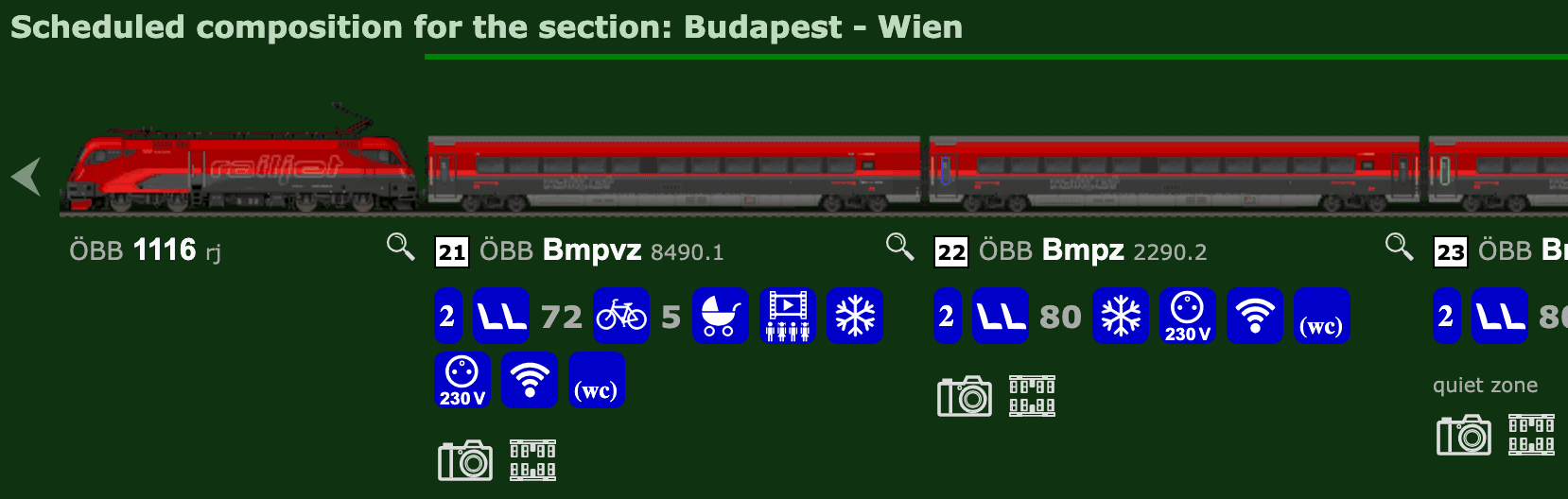
Unfortunately, the tool isn’t perfect. With multiple changes in direction, it can be confusing to figure out which way the train is facing.
The Digital Logbook: Viaduct.world
For years, I’ve been tracking flights around the world using My Flightradar24, Log my World, and similar tools. For just as long, I’d been looking for a comparable solution to log train journeys. That search ended earlier last year when I discovered the fairly new tool Viaduct.world.
With just a few clicks, you can log completed train journeys there, which are then displayed on a map:
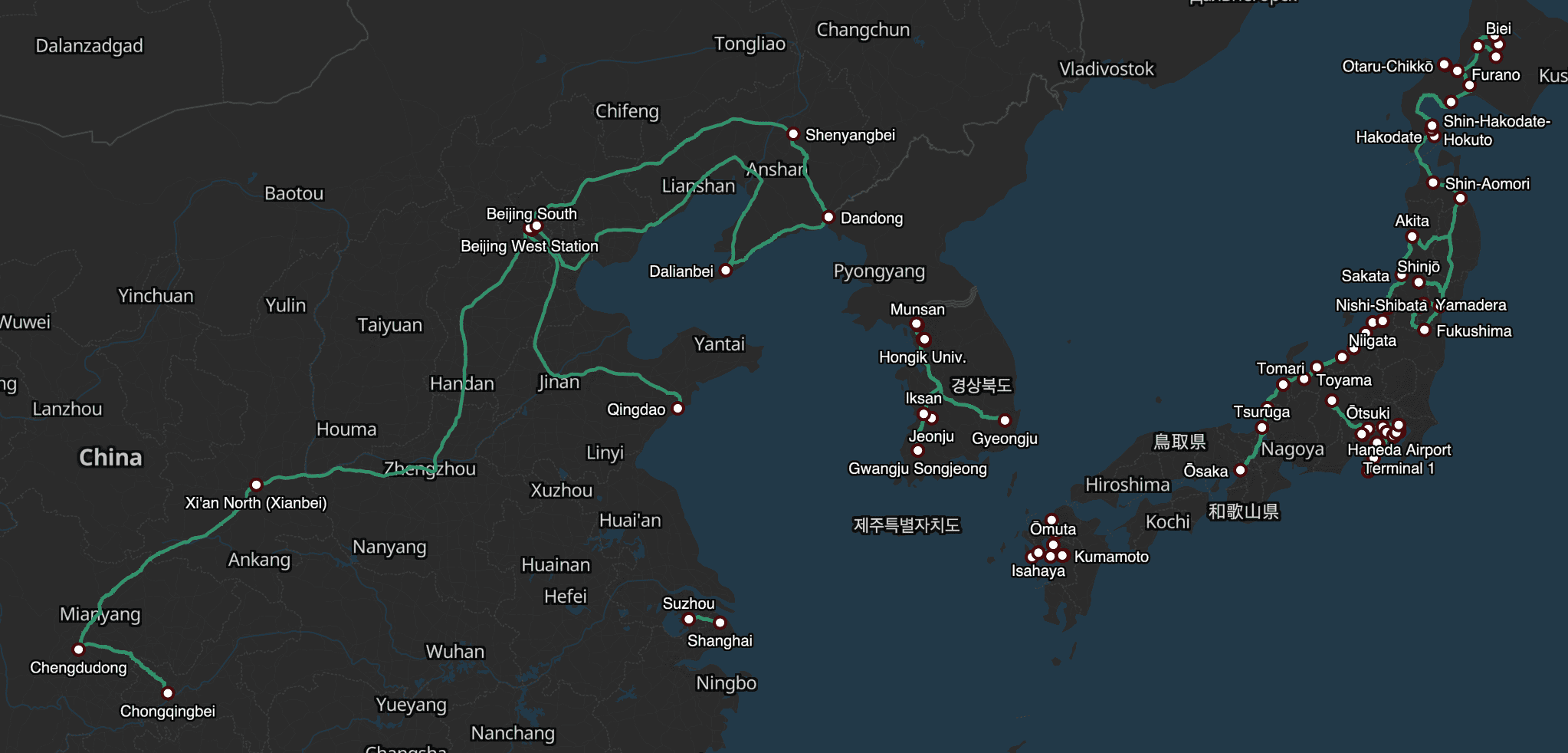
As a minimum, you only need to specify the departure and destination stations; the route is calculated automatically. In Europe, Viaduct can also access timetable data, allowing intermediate stops to be recorded as well.
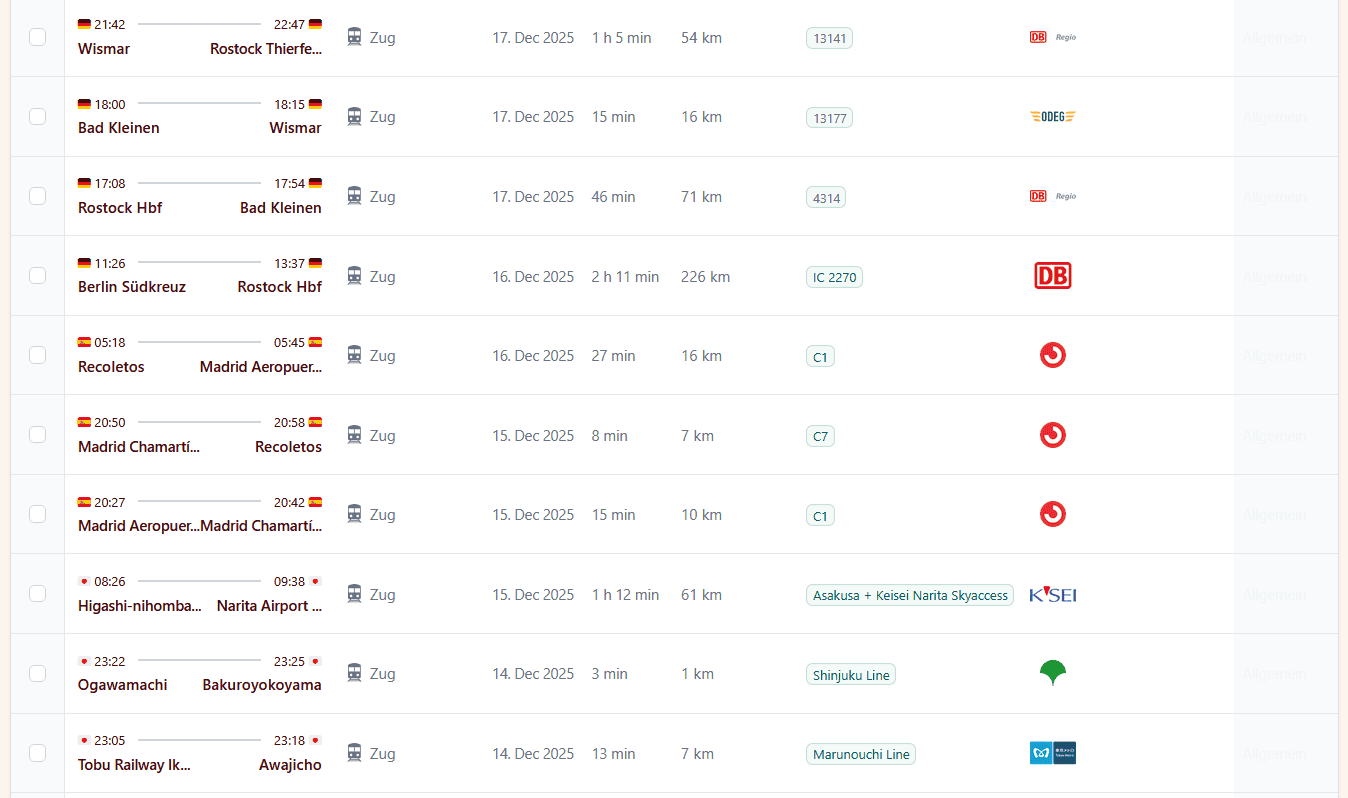
Quite a bit has changed since I first discovered the tool in January 2025. For example, many ferry trips can now also be logged. Most of what’s described in the following article, however, still applies:
Alternatively, you can check out Träwelling or Travelynx, which let you digitally check in for journeys and log them that way. Personally, though, I found their way of working much less convincing.
seat61.com (For Train Travel Worldwide)
Among railway enthusiasts, Mark Smith, aka The Man in Seat 61, is a legend. And anyone who googles train travel abroad will probably come across the blog seat61.com eventually. Particularly worth reading are the articles on train travel in (almost) every country in the world. Whether you’re interested in travelling through Italy, Hungary, Tunisia, Canada, or elsewhere: the website contains almost everything you need to know.
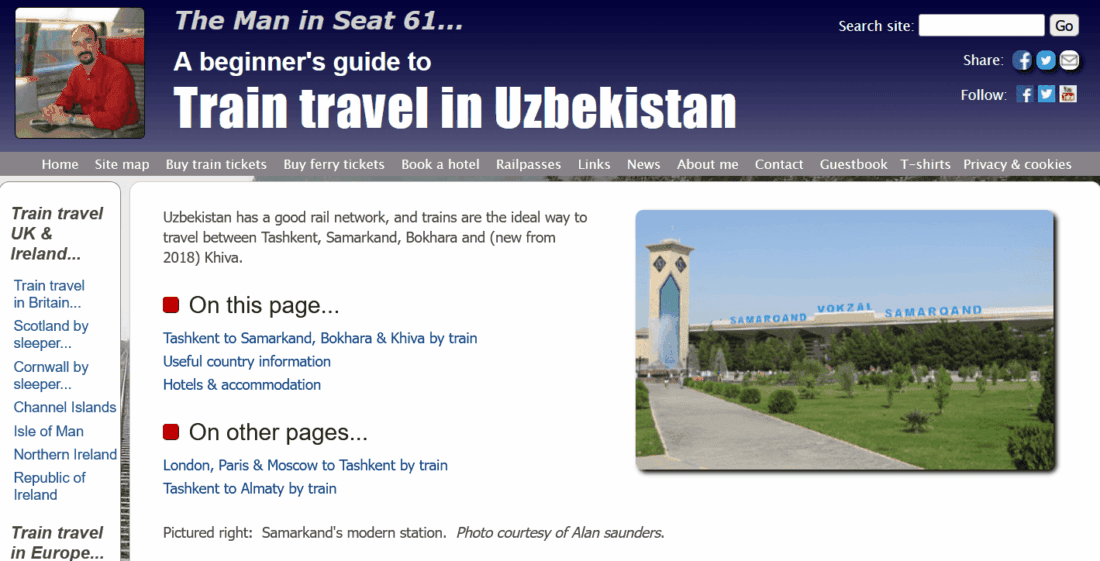
Seat61.com also offers tips on routes such as travelling by train from London all the way to Albania. These route suggestions are mostly, but not only, interesting for British travellers. Surprisingly often, DB Sparpreis tickets turn out to be the best way to book cheap fares. There’s also some content about passenger ferries.
Zugfinder.net (for Delays)
In the past, Deutsche Bahn had its train radar that showed the live position of all long-distance trains. Although that feature was discontinued, it lives on at Zugfinder.net.
That’s not the main focus here, though. What’s more intriguing is the delay history. If a train regularly arrives an hour late, you can probably forget about that 8-minute connection. And indeed, there are some trains where a 30-minute delay is more the rule than the exception:
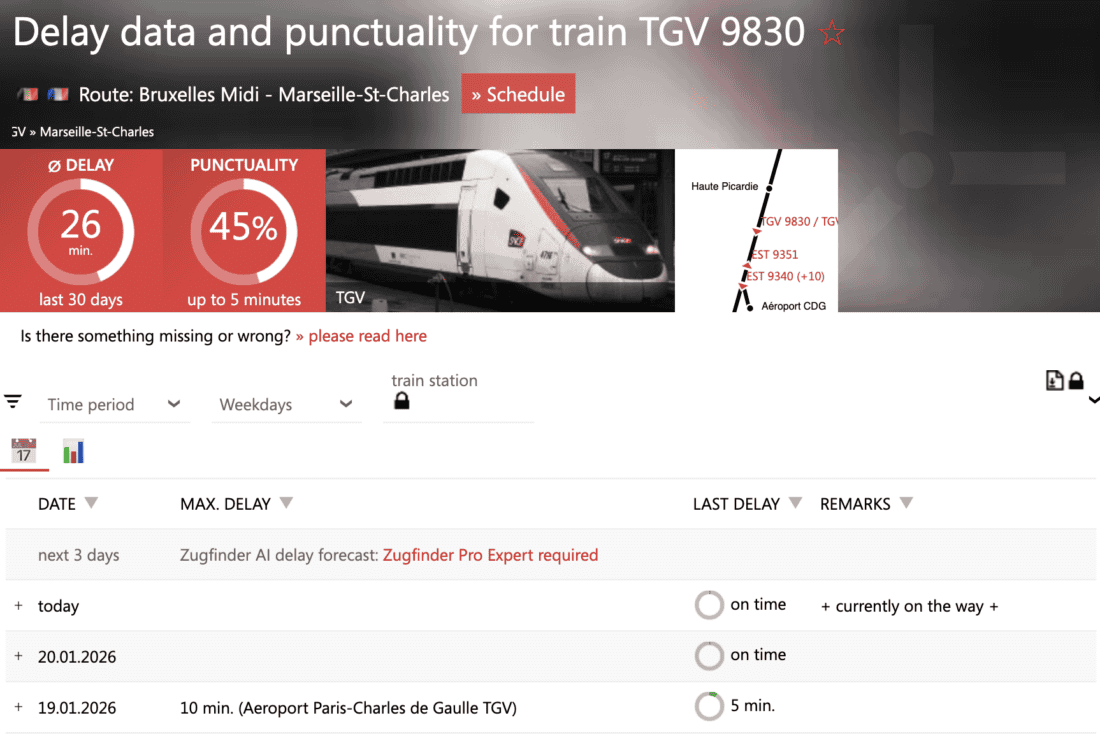
Some information (such as delay forecasts and history beyond 30 days) is only available with a Pro subscription starting at €1 per month, or a lifetime option for €144.
Chronotrains (Where Can I Get Within X Hours?)
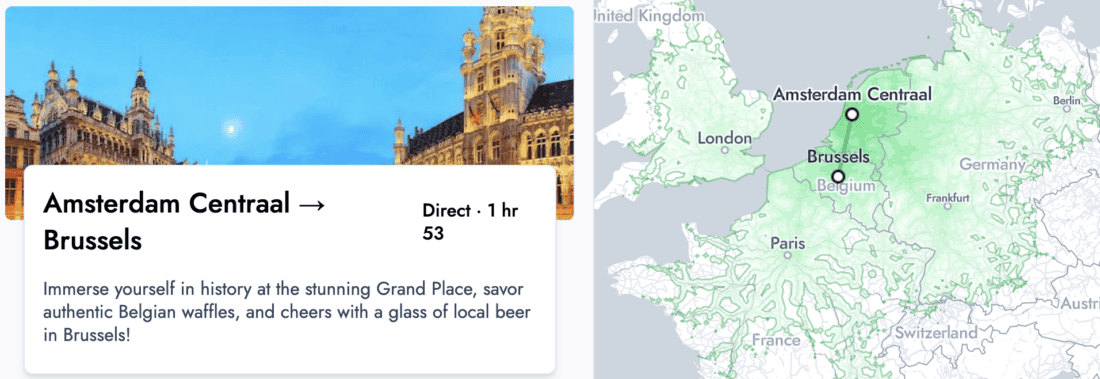
The small tool Chronotrains shows which destinations in Europe you can reach within a maximum of one, two, up to eight hours of travel time. The results are clearly displayed on a map:
OpenRailwayMap (Maximum Speeds and More)
As a train traveller, you’re probably familiar with the information screens showing the current speed of the train. You may also have wondered why the train is going so slowly presently, or what the technically possible maximum speed would be.
If so, OpenRailwayMap is an interesting website. It doesn’t just show all railway lines worldwide. You can also filter by maximum speeds, for example:
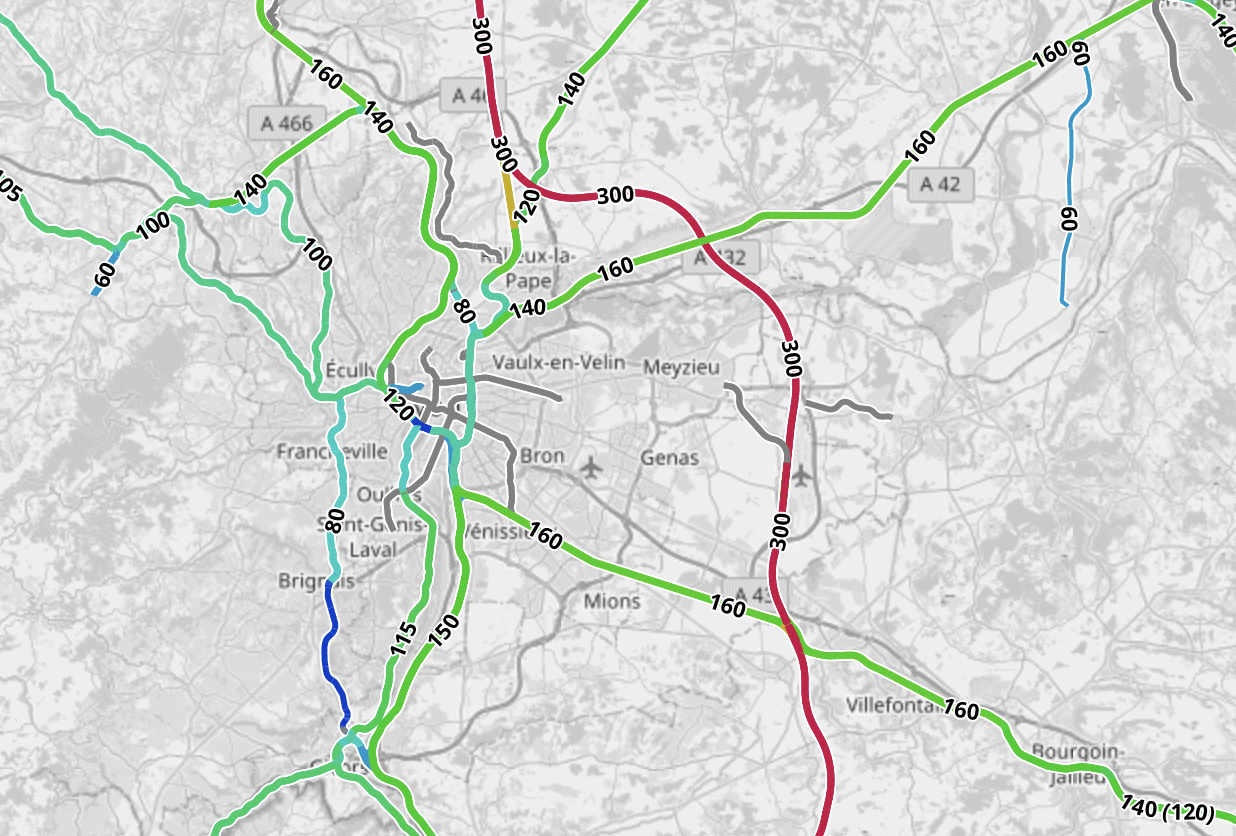
By the way, you can also see which routes are electrified, what the track gauge is, and even which signalling system (e.g. ETCS) is used. There’s also an app for Android and iOS, although you’ll have to do without a few features there.
Rome2Rio (Quickly Finding Routings)
Rome2Rio is a useful starting point whenever you’re trying to figure out how to get from A to B, especially across borders or in less obvious cases. Instead of focusing only on trains, the tool combines rail, bus, ferry, flight, and car options and shows how they fit together, which makes it easy to understand what routes are even possible. This is particularly helpful for international journeys, remote destinations, or trips where there’s no single obvious rail connection.
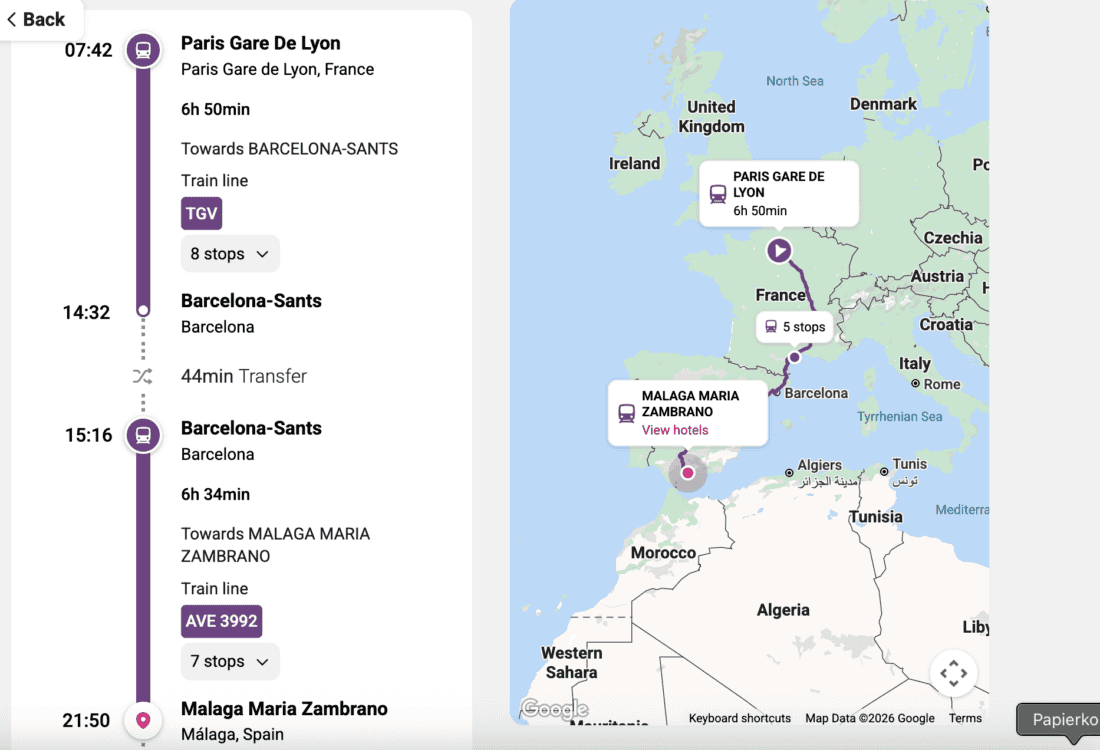
For train travellers, Rome2Rio works best as an orientation tool rather than a precise planning or booking platform. It gives you a clear overview of travel times, transfers and rough costs, but the details should always be double-checked with the relevant rail operators. Still, when you’re in the early planning phase or trying to connect regions with very different transport systems, Rome2Rio can save a lot of time and uncertainty.
Your Recommendations?
This list is certainly not exhaustive, and there are surely more tools that make life with and on trains a bit easier. If you have another recommendation, feel free to leave a comment.
Translated and edited by Ditmar
Cover Picture: Photo by Izzat Zulkarnain on Unsplash